Most organisations are thinking carefully about how AI will be used internally. Far fewer are asking the more urgent external question: what is AI already reading, summarising, and carrying into the market about us?
A new white paper, Who Speaks for the Organisation: Owning the AI Narrative, examines that issue. It argues that AI is no longer only a tool used inside the organisation. It is now an external reader of the organisation’s public content, sitting alongside customers, partners, regulators, analysts, journalists, and the wider market.
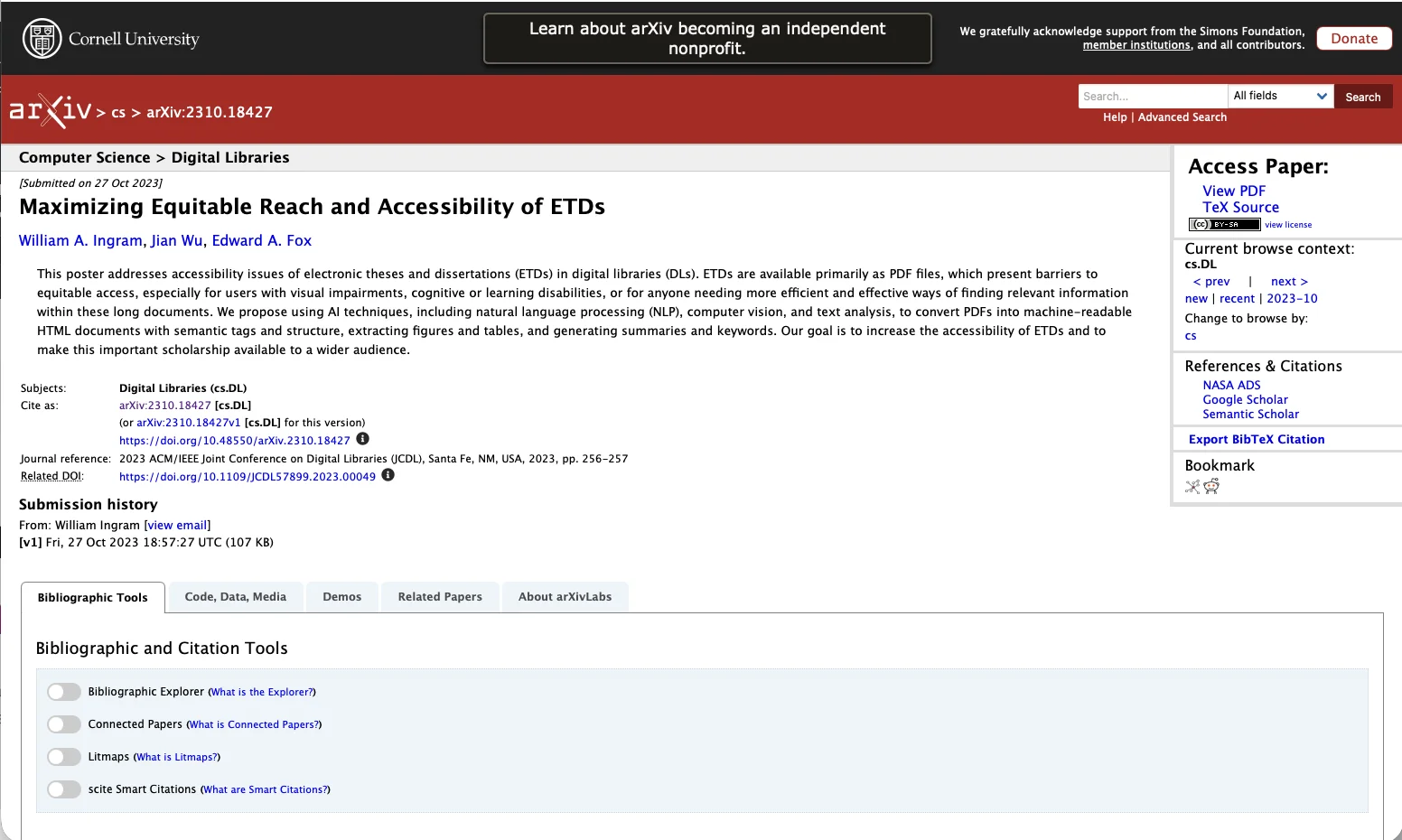
That matters because AI does not only read the material an organisation would choose to present today. It reads what is available. That can include old PDFs, archived documents, forgotten web pages, historic brochures, annual reports, campaign material, product literature, third-party copies, and content published by teams that no longer own it.
For larger organisations, the exposure increases quickly. More teams, brands, countries, systems, agencies, suppliers, campaigns, documents, and websites mean more public material to govern. The risk is not only what the organisation publishes now. It is what remains online, what remains readable, and what AI systems may use to describe it.
That is why this issue now belongs at executive level. AI can shape discovery, comparison, recommendation, and reputation before a human relationship has even started. The organisation either takes control of the content AI can read, or accepts the version AI assembles from what is already online.
The PDF estate
The paper focuses on one overlooked part of that challenge: the PDF estate.
PDFs have traditionally been treated as an accessibility issue. If they cannot be used by people relying on assistive technology, they create inclusion, service, and compliance problems. That remains true, but it is no longer the whole issue.
The same structural weaknesses that make PDFs difficult for people can also make them harder for AI systems to parse, retrieve, summarise, and use accurately. A visually strong PDF may work well for a human reader, but still lack the structure needed for reliable machine interpretation. That matters when AI is increasingly involved in how organisations are found, compared, explained, and shortlisted.
A new governance question
This creates a new governance question. If AI cannot read the organisation’s content properly, it may describe the organisation poorly. If it cannot identify the right information, it may rely on older or weaker sources. If third-party material is easier to interpret than the organisation’s own content, the external narrative can become stronger than the official one.
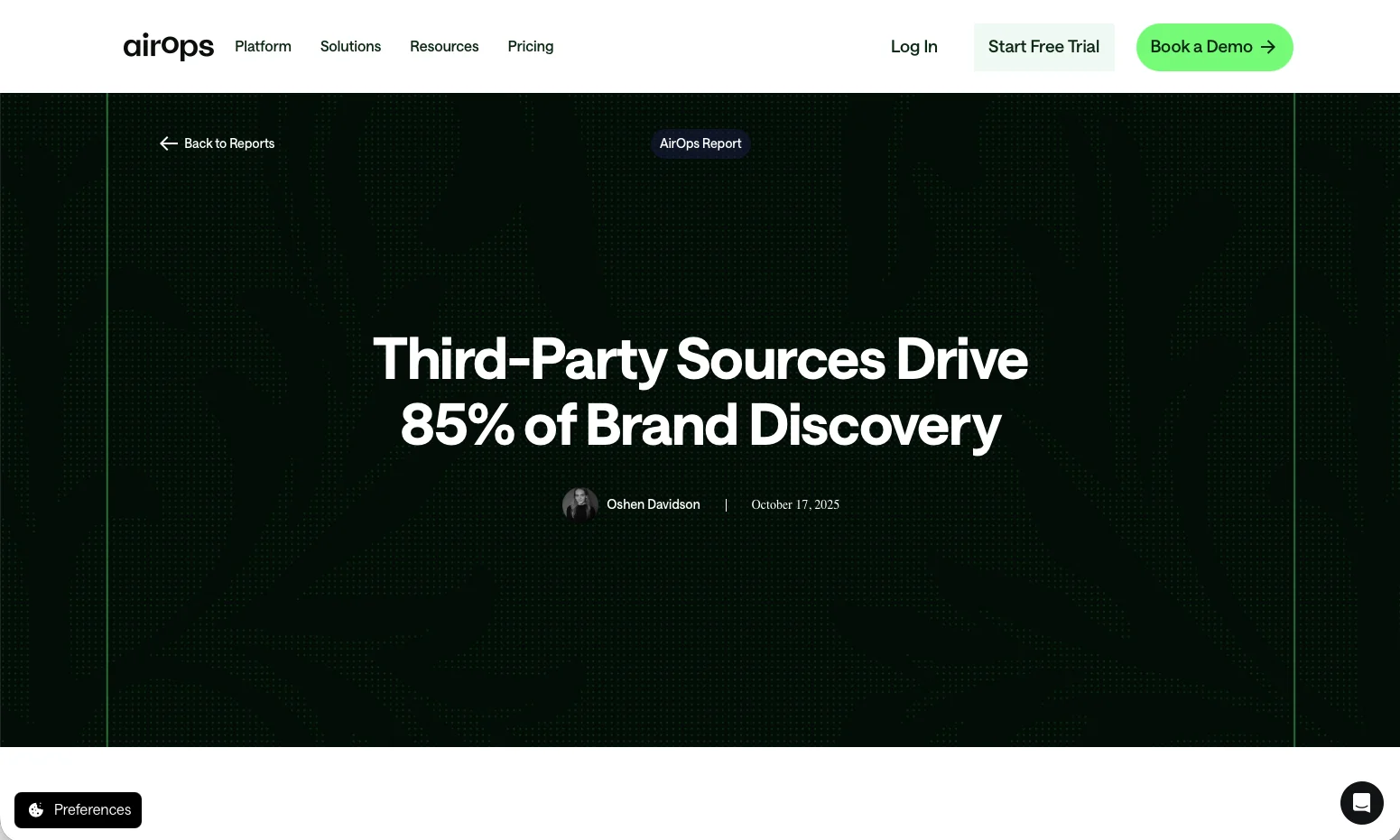
The white paper explains why this is not just a marketing issue. It sits across reputation, accessibility, search visibility, digital governance, regulatory readiness, competitive position, and confidence in what the organisation has made public. The larger the organisation, the harder that control becomes without a structured approach.
It also explains why external AI exposure is different from internal AI adoption. Internal AI is about what the organisation chooses to use. External AI exposure is about what AI systems can already see, read, reuse, summarise, and compare. That difference is critical, because the second issue is already active.
Who the paper is for
The paper is intended for Chief Executives, CIOs, Chief Digital Officers, legal teams, compliance leaders, communications teams, and senior marketing leaders responsible for public trust, digital operations, and organisational visibility.
Readers will understand:
- Why external AI exposure is now a board-level issue.
- Why larger organisations face greater public content exposure.
- Why PDFs matter beyond accessibility and compliance.
- How historic content can continue shaping public perception.
- Why design-led documents can be weak for AI interpretation.
- How accessibility, machine readability, and AI readiness now overlap.
- Why stale, duplicated, or unmanaged content can weaken narrative control.
- What senior teams should consider when deciding who owns the AI-readable version of the organisation.
Owning your AI narrative
Whitepaper: Who Speaks for the Organisation
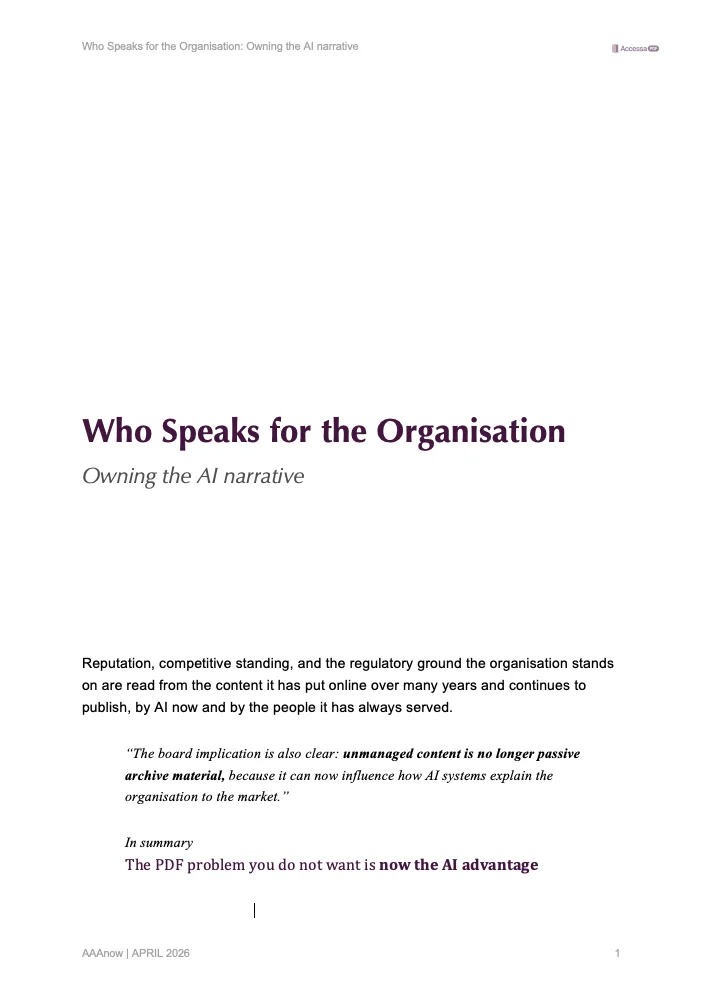
The organisation is now judged by content it may no longer fully control. Years of published material shape reputation, competitive standing, and regulatory exposure, while AI systems now read, summarise, and represent that content at scale.
In summary: The PDF problem you do not want is your AI advantage
Why it is important - now
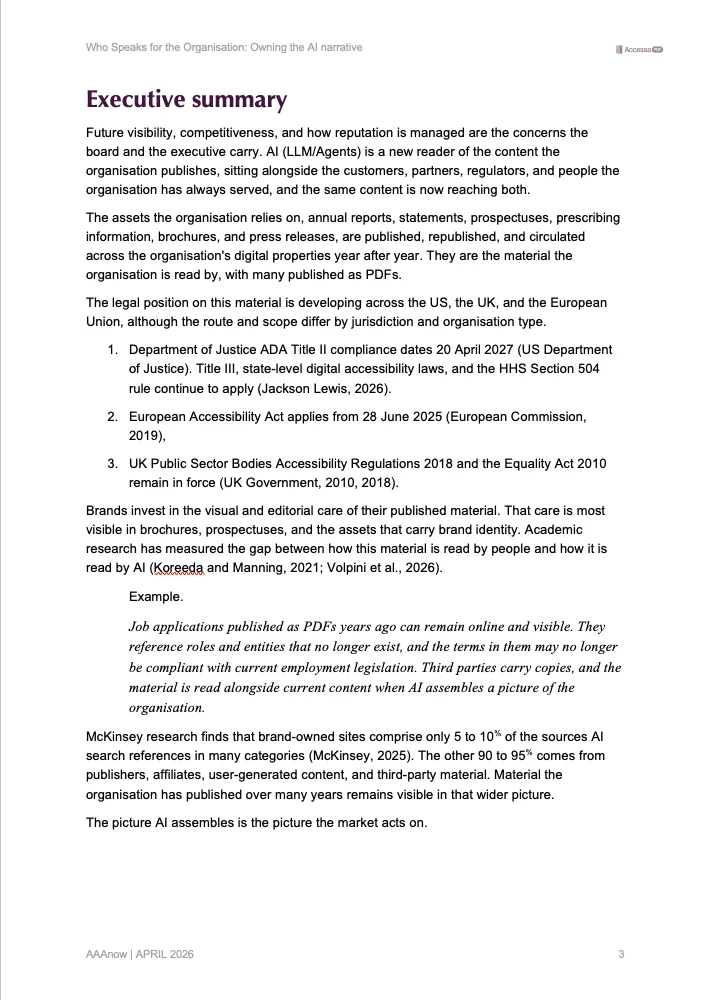
The paper does not argue that AI behaves in one fixed way. It does not suggest that every legal duty applies equally to every organisation. Its point is more practical: public content is now being read in new ways, by new systems, at a scale most organisations have not yet governed.
That makes the issue important?
AI is already using what is online now. Waiting does not pause that process. It only leaves the organisation’s public picture to be assembled from whatever content is easiest to find, easiest to parse, and easiest to reuse.
AI is already using what is online now. Waiting does not pause that process. It only leaves the organisation’s public picture to be assembled from whatever content is easiest to find, easiest to parse, and easiest to reuse. The paper also sets out a practical route for action. Through the aicm secure tag, PDFs can be converted into inclusive web content and served alongside the original documents, helping people, AI engines, and AI agents access a structured version of the same material.
The work builds on the heritage of AAAnow, The Digital Confidence Company, which offered the first commercial automated website testing in 1999 and has spent 25 years helping organisations understand digital quality, accessibility, risk, and confidence at scale.
Who Speaks for the Organisation is a paper about control. It asks whether the organisation owns the narrative AI is reading, or whether that narrative is being assembled from unmanaged, inaccessible, outdated, or incomplete material.
For organisations serious about reputation, inclusion, competitiveness, and digital confidence, that question now needs a clear answer.