Government Recommendations
What governments recommend
Across the UK, US, and EU, the message from government is consistent: where PDFs cannot be made natively accessible, provide an accessible alternative. That is exactly what aicm does.
An important consideration for any government entity is the time and cost of retrospectively dealing with all PDFs. Automation removes any disproportionate burden.
The Guidance
Three jurisdictions, one message
United Kingdom
Publish accessible documents
The UK Government Digital Service recommends publishing content as HTML web pages rather than PDFs. Where a PDF is necessary, an accessible alternative must be provided. The guidance is clear: PDFs should not be the default format for government content.
United States
Provide accessible alternatives
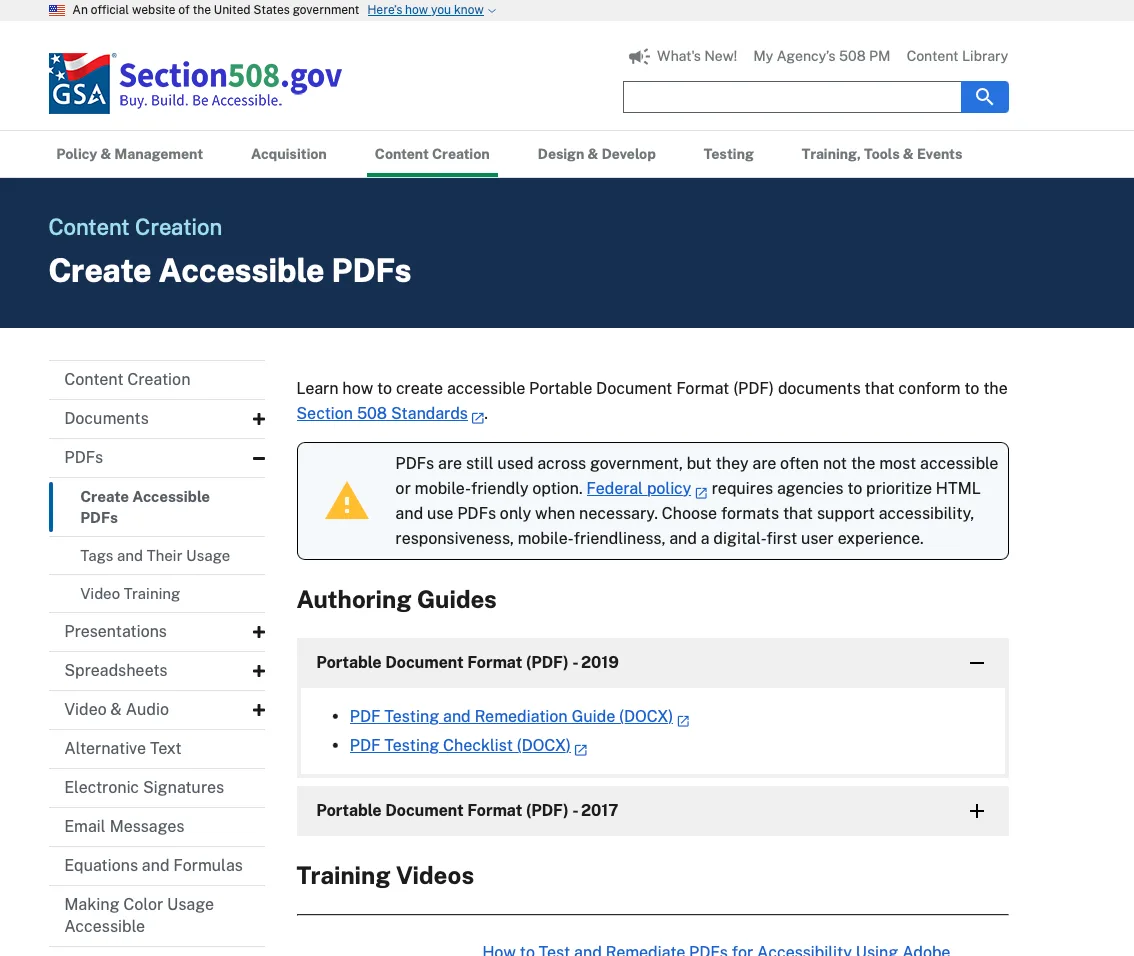
Taken from ADA / 508 Page: "PDFs are still used across government, but they are often not the most accessible or mobile-friendly option. Federal policy requires agencies to prioritize HTML and use PDFs only when necessary."
European Union
Accessible digital services
The European Accessibility Act and the Web Accessibility Directive require public sector bodies and, from June 2025, private sector organisations to ensure digital content is perceivable, operable, understandable, and robust.
Content Creation
Create Accessible PDFs
Creating accessible Portable Document Format (PDF) documents that conform to the Section 508 Standards.
PDFs are still used across government, but they are often not the most accessible or mobile-friendly option. Federal policy requires agencies to prioritize HTML and use PDFs only when necessary. Choose formats that support accessibility, responsiveness, mobile-friendliness, and a digital-first user experience.
The Problem
Disproportionate Burden
For any public body, the expectation of having every PDF in a perfect accessible format poses a genuine disproportionate burden. The volume of legacy documents, the cost of manual remediation, and the technical complexity involved make full remediation unrealistic for most organisations. aicm offers a pragmatic approach to compliance, ensuring that visitors receive the support they need while the organisation manages its resources appropriately.
With automation removing the burden and providing a reasonable alternative format, organisations can demonstrate that they have made a reasonable adjustment. The accessible version is available, the user is supported, and the obligation is met without the need for an exemption claim.
In some cases, such as archives or historical collections, this approach means organisations are going beyond their regulatory obligations. Content that would otherwise remain entirely inaccessible is now available in an accessible format, turning a compliance risk into a positive demonstration of commitment.
Compliance
Accessibility statement content
Accessibility statements are a requirement under UK, EU, and US regulations. They must describe what is accessible, what is not, and what steps have been taken to address known gaps.
PDF content is one of the most common areas flagged as non-compliant. Organisations that have not addressed their PDF estate must declare this in their accessibility statement, creating both a legal and reputational exposure.
With aicm in place, the statement can reflect that accessible alternatives are provided for PDF documents across the site, delivered automatically and maintained without manual intervention.